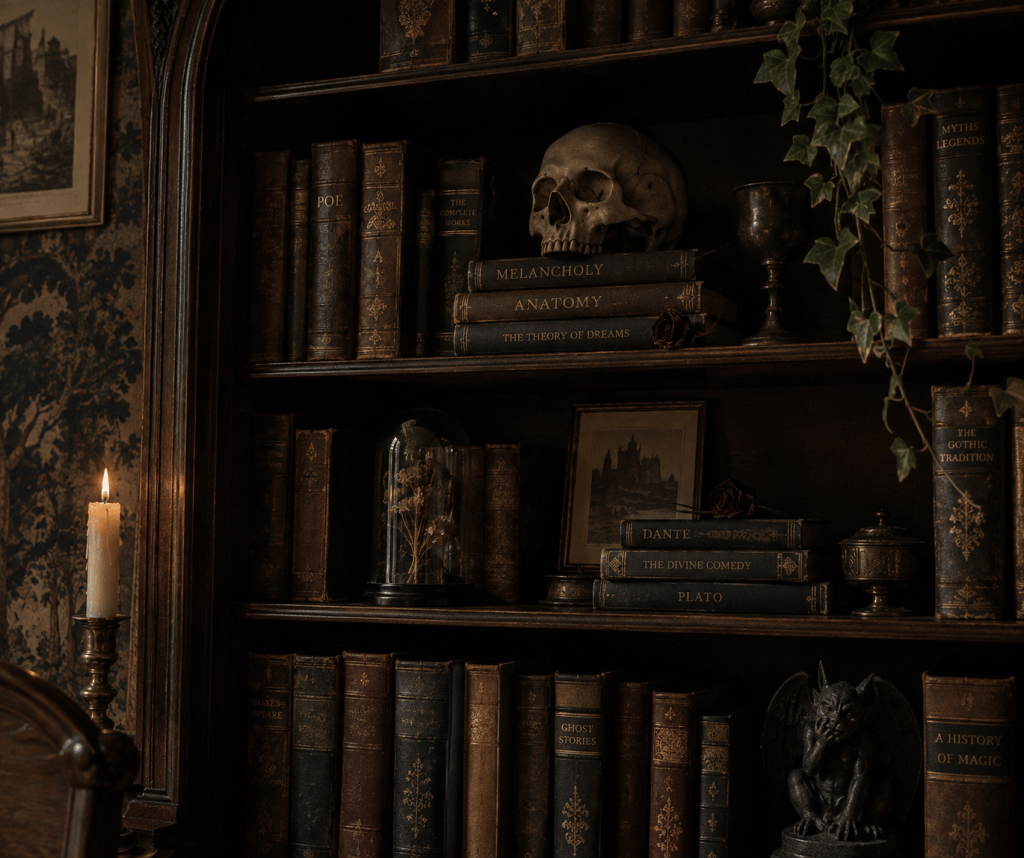
What Summerween reveals about the way we package reading into seasons
There comes a point every August at which certain readers, having behaved with exemplary patience through several months of sunshine, appear suddenly to decide that summer has gone on quite long enough. The peaches are still ripe, the pavements hot, and the evenings bright until late, but somewhere a candle has been lit, a Gothic novel has been placed beside an iced coffee, and Halloween has begun to make its way into the season.
The name presently given to this impatience is Summerween, a term borrowed from an episode of Gravity Falls and lately enjoying a particularly vigorous life on BookTok, where it has come to mean the cheerful collision of Halloween and high summer: ghosts beside swimming pools, skeletons in sunglasses, horror novels taken on holiday and all the usual furniture of October dragged several months forward because some people, quite understandably, decline to wait for the weather to cooperate. The Bookseller identified it this August as one of BookTok’s newest reading trends, particularly associated with horror, thrillers and Dark Academia given a summery twist; publishers have already joined the festivities, and Penguin Random House was recommending Summerween reading as early as April.
It would be easy to dismiss the whole thing as another harmless invention of the internet, and it is certainly difficult to preserve one’s gravity before a phrase such as pumpkin spice with popsicles. Yet beneath the carved fruit and beach-going ghosts lies a surprisingly interesting question, for Summerween only seems contradictory because we have already agreed, without ever remembering when the agreement was made, that Gothic books properly belong to autumn. And nobody appears to have thought to ask the Gothic novel what it thinks.
The Gothic Has Never Been Particularly Good at Keeping to October
If one were asked to arrange Gothic literature upon a calendar, October would admittedly make a persuasive claim. The days contract, the trees perform their annual imitation of magnificent decay, fog returns to lend ordinary streets an interesting air, old houses become suddenly more interesting at dusk, and darkness arrives early enough for a reader to spend the evening feeling uneasy. Nature seems to have taken on the work of a rather good set designer. And yet some of the Gothic’s most famous moments show very little respect for this arrangement.
Frankenstein, that great ancestor of modern horror, was conceived not during a bleak November at all but on a summer holiday. In 1816, Mary Godwin, not yet Mary Shelley, was staying near Lake Geneva with Percy Shelley, Lord Byron, Claire Clairmont and John Polidori when an astonishingly cold and storm-ridden season confined the company indoors. The eruption of Mount Tambora the previous year had disrupted weather across Europe so severely that 1816 became known as the Year Without a Summer; rain beat against the villa, skies darkened, candles were lit, German ghost stories were read, and Byron proposed that the company should attempt supernatural tales of their own. From those summer evenings came Mary’s imagining of Frankenstein and, through Polidori, The Vampyre, an important forebear of the aristocratic vampire who would later acquire such excellent teeth and such poor respect for invitations. There is something wonderfully inconvenient about this history. One of the great myths of Gothic literature was born during June, beside a lake, among young people who had gone abroad for the summer and found the weather disagreeable.
Bram Stoker had no particular interest in waiting for autumn to make Whitby ominous. Much of Dracula‘s famous Whitby sequence unfolds in August, when the town is crowded with holiday-makers and Lucy Westenra is walking, rowing, taking the sea air and writing cheerful letters about her health while matters around her become progressively less suited to a seaside holiday. The storm that brings Dracula’s ship ashore arrives on an August day described as unusually fine before the weather turns with terrible suddenness. The horror works not despite the season but because of it: ordinary summer pleasures continue close beside something dreadful.
Charlotte Brontë understood the same contrast. Some of the most charged chapters of Jane Eyre unfold beneath a splendid midsummer, when Thornfield is surrounded not by dead trees and November fog but by fields, roses, fruit, warm evenings and skies burning late into the night. Beauty does not protect the house from secrets; if anything, abundance makes concealment stranger. There is something peculiarly disturbing in finding darkness where daylight ought to have made everything safe.
Perhaps we have confused the Gothic with its props. A ruined abbey is useful, certainly; so is fog, and few sensible writers would refuse a thunderstorm when one presents itself. But the Gothic has never depended upon cold weather so much as upon unease: the feeling that something familiar has gone wrong by degrees. A house seems to be keeping a secret and family story no longer quite adds up. There is a locked door, and although every sensible person knows better, you find yourself reaching for the handle. None of that really requires a cardigan.
Summer Can Be Frightening in Entirely Different Ways
Indeed, summer possesses its own considerable resources for making a person uneasy, even if it is more often associated with leisure and brightness than with fear. Winter frightens by emptiness, yet summer can frighten by excess.
There is too much light, too much growth, too much heat; gardens become overripe, insects multiply, flowers grow heavy upon their stems, windows stand open after dark and tempers deteriorate in rooms which will not cool. A winter landscape may suggest that nothing can live; a summer one can produce the rather different suspicion that everything is living rather too enthusiastically.
Writers have long understood what heat does to narrative. It makes people restless, languid, impulsive and irritable; it loosens routines while intensifying physical sensation, and it can make an ordinary room feel intolerably close. Penguin’s survey of heat in fiction notes that critics have even described extreme heat as a new kind of Gothic weather, capable of producing its own atmosphere of exhaustion, confinement and menace. Southern Gothic has made a whole climate out of oppressive heat, decay and histories that refuse to remain buried; contemporary climate Gothic, unsurprisingly, has found still darker possibilities in summers that seem no longer willing to end. The Gothic, after all, has always depended upon the corruption of something apparently safe. A sunny afternoon in which nothing can possibly go wrong is therefore excellent material, since fiction has never encountered a more tempting proposition than nothing can possibly go wrong. Summerween, beneath its cheerful silliness, has rediscovered something literature already knew: dread does not melt away as temperatures climb.
So How Did Autumn Acquire Custody of the Gothic?
The answer is partly that autumn is simply very good at the job.
The Gothic has always loved thresholds to transitions, ruined boundaries and things in the process of becoming something else, and autumn is the year’s great transitional performance. The world is beautiful because it is visibly dying; evenings lengthen, houses close themselves against the weather, and ordinary pleasures acquire a faint sense of being gathered before winter. Add Halloween, centuries of ghostly association, the commercial genius of the pumpkin and the fact that candlelight is considerably more attractive when one is not already sweating, and the partnership begins to seem inevitable.
But our present attachment to seasonal reading goes further than atmosphere. Books are now increasingly encountered not only as stories but as moods, and moods have acquired wardrobes. BookTok has been particularly ingenious at this. There are books for rainy days, books for cottage weekends, books for dark-academia autumns, books for summer holidays, books for the first cold evening of the year; covers, drinks, blankets, weather, music and reading are assembled into a complete sensory experience in which choosing a novel becomes partly the art of choosing what one wishes the next several hours of one’s life to feel like. With more than 84 million posts under #BookTok, and TikTok reporting that 51 per cent of readers aged sixteen to twenty-five now discover new books through the platform, this way of presenting literature is no trivial fringe phenomenon.
There is a commercial convenience to it, naturally. “A Gothic novel about inheritance, repression and the unstable relationship between desire and identity” requires a moment’s thought; “perfect for spooky season” requires none. A book placed beside a cup of tea, three maple leaves and a tartan blanket has announced its emotional intentions before anybody has read the first sentence. Yet it would be ungenerous to sneer at this entirely, for readers have always created rituals around books. We save particular novels for Christmas, take mysteries on trains, and occasionally postpone a beloved book until the circumstances feel worthy of it. There is pleasure in making reading ceremonial. A season can deepen one’s susceptibility to a story in much the same way that music, weather and place sometimes become permanently attached to the memory of having read it.
The trouble begins only when the ritual hardens into a rule. Dark Academia becomes an autumn/winter genre; Gothic becomes an October genre; beach reads must be light; winter reading must be cosy; and before long we are not merely noticing affinities between books and seasons but quietly placing literature into little designated compartments and shelves come to obey a calendar that the books themselves never requested. Summerween is amusing because it breaks the rules, but it is also amusing because it reveals how thoroughly we had accepted them.
Reading Has Become More Beautiful, and Perhaps a Little Too Well Behaved
There is something rather charming about the modern desire to make reading beautiful. After decades in which books were periodically declared endangered by screens, social media has contrived, with delightful perversity, to turn the physical act of reading into something people photograph, share and imitate. Annotated pages, beautiful editions, reading journals, bookshops and personal libraries have all become objects of enthusiasm rather than embarrassment, and one need not be very severe about the fact that a strategically placed cup of coffee occasionally assists the process.
If an aesthetic persuades somebody to pick up Carmilla, it would be a gloomy critic indeed who complained about the fact. But literature becomes narrower when atmosphere is allowed to precede it too freely, and categorise it too neatly. A Gothic novel is not Gothic because it contains autumn leaves, any more than Wuthering Heights becomes cosy because somebody has photographed it beside a knitted blanket. The best books continually betray the categories into which we place them. They are stranger, less tidy and more various than their marketing, and they refuse to provide only the feeling sometimes advertised upon the label.
The same is true of seasons. Summer itself is not one feeling: it can be languorous or jubilant, oppressive or lonely; it contains its share of thunderstorms, empty houses, sleepless nights, holidays gone wrong, gardens becoming wild and the peculiar eeriness of streets from which everybody appears to have vanished in the afternoon heat. August can be unsettling enough without borrowing October’s decorations.
Perhaps that is what makes Summerween unexpectedly appealing. It does not abolish seasonal reading but rather, makes the season larger. It gives the person who loves October permission to borrow its pleasures early, while reminding the rest of us that atmosphere need not be received ready-made from the calendar. You may enjoy reading Dracula in August, where a considerable portion of Dracula is already waiting.
The Ghost Does Not Care What Month It Is
I do not, after all this, intend to surrender autumn’s claim upon Gothic reading entirely. There are few pleasures more complete than beginning a dark novel when the evening has turned unexpectedly cold, rain has placed itself against the window and the outside world has provided precisely the scenery the book requires. Human beings are creatures of association, and it would be a miserable sort of intellectual seriousness that forbade us from enjoying one merely because a marketing department enjoys it too. But there is a difference between allowing a season to enrich a book and allowing it to dictate one.
The Gothic has always prospered in places where certainty fails, and perhaps it ought to be allowed the same freedom from our shelves. It may come out of an Alpine storm in June, arrive upon the Whitby coast in August or hide upstairs while roses bloom at Thornfield. Summerween, for all its skeletons in beachwear, is therefore less a violation of Gothic tradition than a return to one of its oldest pleasures: putting darkness where it is not expected.
Perhaps we have spent too long arranging our reading lives as carefully as shop windows, waiting for October before admitting ghosts, December before permitting comfort, and June before producing the novels with beaches upon them. Books have always been more unruly companions than that, liable to belong unexpectedly to a place, a season or a version of ourselves for which nobody designed the appropriate aesthetic.
So carve the watermelon if you like. Read Frankenstein beside the pool, take Jane Eyre into the garden while the roses are still in bloom, and let Dracula keep his August appointment with the sea. There is no need to wait for October before opening the door to something strange. Autumn will come soon enough, trailing fog and dead leaves behind it. But the Gothic has never belonged to one month, one weather, or one particular shade of candlelight. It belongs wherever the ordinary world develops a crack—and summer, for all its brightness, has never been short of those.
Written by Nishat Hossain. I write about books, culture, everyday life and the questions that make each of them interesting. For commissions and collaborations, visit my Work With Me page.


Leave a Reply